


When you launch a print-on-demand apparel brand, the single most consequential decision you make isn't your logo or your ad budget — it's your manufacturer. Because here's the uncomfortable truth most POD guides skip: the way your product is made decides what your brand is allowed to become. A supplier that can only source a stock blank and stamp a chest print has quietly capped your quality, your print size, and your retail price before you've sold a single unit.
For years, Printful has been the default answer for D2C creators — owned fulfillment centers across four continents, a 450+ product catalog, and one of the smoothest software stacks in the industry. But a newer, sharply different model has emerged for a specific kind of seller. PODpartner isn't a fulfillment network at all: it's a vertically integrated factory that knits its own yarn, dyes its own fabric, and stacks DTG, embroidery, and vinyl on a single garment in one production pass. In this head-to-head, we compare the two across the things that actually determine what you can sell — fabric, print real estate, decoration depth, consistency, catalog, and margin.
- Fabric & Weight: PODpartner knits its own blanks up to 440GSM heavyweight; most of Printful's catalog runs the ~240–320GSM band typical of sourced blanks like Bella+Canvas and Gildan.
- Print Real Estate: PODpartner's Jumbo DTG reaches 24×24" (and even its standard 16×21" beats Printful's ~12×16" frame).
- Decoration Depth: PODpartner stacks DTG + 15-color embroidery + HTV on one garment in a single pass; Printful runs those as separate workflows and caps embroidery around 6 colors.
- Catalog & Reach: This is Printful's decisive win — hundreds of non-apparel SKUs (mugs, wall art, phone cases) and owned fulfillment hubs across the US, EU, UK, and Mexico.
The 30-Second Executive Summary
Match the Factory to Your Positioning
This isn't a "which is better" question — it's a "what are you building" question. If you're running a general merch store, selling lifestyle accessories, or need fast multi-region fulfillment, Printful is the safer, more versatile platform, and it isn't close. But if your brand lives on heavyweight fabric, oversized boxy fits, edge-to-edge graphics, and multi-texture decoration — the things that let you charge $80–120 instead of $30 — PODpartner can manufacture a product Printful structurally cannot. Our 9.4 reflects PODpartner's fit for brand-builders specifically; for general merch, Printful earns the higher mark.
Explore PODpartner's Blanks →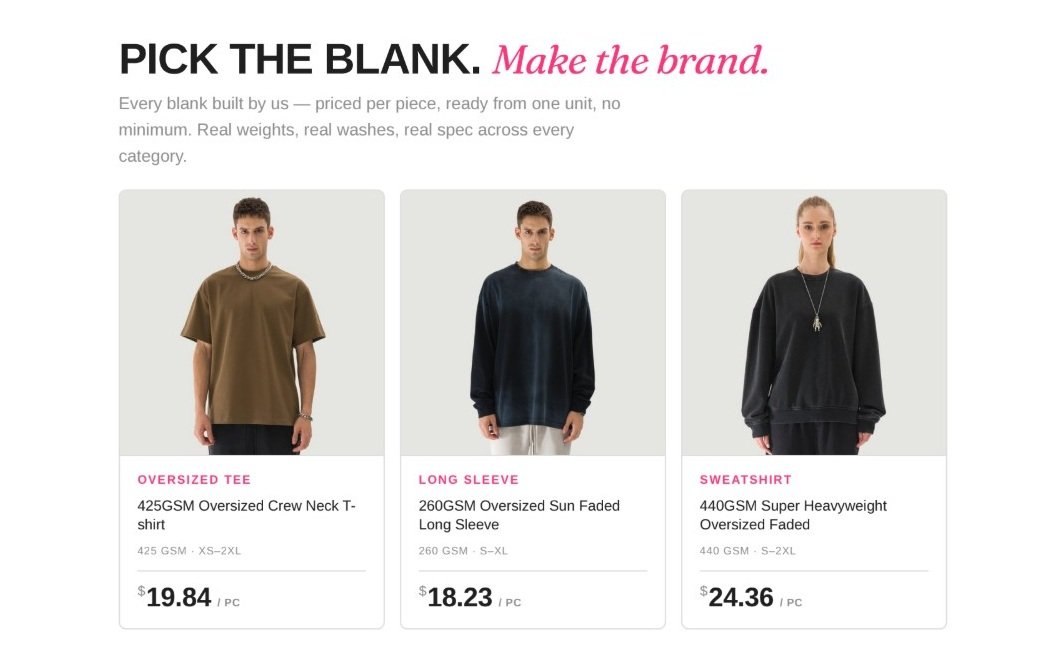
Platform Strengths at a Glance
- Vertical factory model — knits and dyes its own blanks, not sourced.
- 440GSM heavyweight fleece and 425GSM cotton with real garment washes.
- 24×24" Jumbo DTG across up to 21 print positions.
- Hybrid stacking: DTG + 15-color embroidery + HTV on one piece, one pass.
- Published delay policy: 1% credit per late day, plus a ZeroShrink guarantee.
- Owned fulfillment hubs across the US, EU, UK, and Mexico.
- 450+ products including home goods, drinkware, hats, and phone cases.
- Branded pack-ins and warehouse storage for physical inserts.
- 20+ native integrations including Amazon, eBay, Etsy, and Shopify.
- Genuinely generous free plan; Growth ($24.99/mo) unlocks up to ~33% off.
How We Compared Them
Rather than a spec-sheet beauty contest, we assessed both platforms on the axes that actually change what a brand can sell. Our comparison draws on each company's current published product and pricing information (verified July 2026), PODpartner's factory documentation, and hands-on experience with both platforms' design and fulfillment workflows. We weighed four things:
- The product ceiling — what you can physically make on a single garment: fabric weight, print size, and decoration methods.
- Batch consistency — whether unit 20 and unit 5,000 come off looking the same.
- Catalog & reach — SKU breadth, non-apparel options, and fulfillment geography.
- Economics — not the cheapest base cost, but the retail ceiling and margin each model unlocks.
The Core Difference: Factory-Direct vs. Managed Network
Every meaningful gap between these two traces back to one structural fact: who owns the production chain.
Printful operates as a managed print-and-fulfillment service. It owns serious DTG and embroidery machinery across its global centers, but it sources finished garment blanks from third-party mills — Bella+Canvas, Gildan, Cotton Heritage, AS Colour. You're building on whatever those mills happen to stock, at whatever weight and cut they offer. (This is the same sourced-blank model used by its sister brand Printify, which merged with Printful under parent company Fyul in late 2024 but still runs as a separate catalog.)
PODpartner operates the other way around: a vertically integrated operation running seven in-house stages under one coordinated system — importing raw yarn, knitting the fabric, reactive dyeing, structural finishing, cutting, sewing, and decoration, with a 10-stage QC pass before dispatch. Because it builds the blank from scratch before applying any ink, it can offer custom washes (acid, sun-faded, snow wash), drop-shoulder boxy silhouettes, and 440GSM weights that no off-the-shelf catalog carries. It's a narrower catalog by design — deliberately deep on premium apparel rather than wide and cheap.
Inside PODpartner's 7-Stage Vertical Line
Printful's chain effectively starts at "buy the finished blank." PODpartner's starts three steps earlier — which is exactly why it can make things a network can't:
Yarn → Knit
Raw cotton yarn is knit in-house into the exact fabric weight and structure — from 260GSM tees up to 440GSM heavyweight fleece. This is the step commodity POD skips entirely.
Dye → Finish
Reactive dyeing and structural finishing lock in color fastness and control shrinkage, enabling custom washes (acid, snow, sun-faded) that sourced blanks can't offer.
Cut → Sew
Pattern cutting and sewing produce the drop-shoulder, boxy, oversized silhouettes the streetwear market actually wears — not the corporate 5K-giveaway fit.
Decorate → 10-Stage QC
Jumbo DTG, embroidery, and HTV are applied — stacked on one garment where needed — then inspected across a 10-stage quality pass before it ships to your customer.
Round-by-Round: Who Wins Each Battle
We scored nine dimensions that matter to an apparel seller. PODpartner takes the craft and consistency rounds; Printful takes catalog, reach, and integrations. The tally leans PODpartner — but note which rounds Printful wins, because for a general-merch store those three may outweigh everything else.
Product Ceiling #1: Fabric Weight
Streetwear lives and dies on hand-feel. A 240GSM blank reads as a giveaway tee the second someone picks it up; a 440GSM piece makes them check the neck label to see who made it. Because PODpartner knits its own fabric, it offers weights and washes that sourced-blank platforms can't stock:
That extra weight isn't vanity — it's what lets a hoodie retail at $90 instead of reading as a $35 print job. PODpartner's own brand customers report raising price points by roughly a third once they moved to statement-weight blanks.
Product Ceiling #2: Print Real Estate
Printful restricts most DTG to a roughly 12×16" rectangle (select styles reach ~16×20"). PODpartner's standard print already beats that at 16×21" — and its Jumbo DTG platen reaches a full 24×24", letting a graphic spill over shoulder seams, drop to the hem, and cover an entire back panel across up to 21 print positions.
Product Ceiling #3: Decoration Depth
This is the gap that's hardest for a network to close. Printful executes DTG or embroidery well, but as separate manufacturing workflows — combining them on one garment means complex custom work, and embroidery generally caps around 6 colors with a per-design digitization fee. PODpartner treats the whole garment as one canvas:
Picture a full back-panel DTG graphic, an embroidered chest logo, and metallic HTV lettering down one sleeve — one garment, one run. That's the "how do you layer embroidery over a printed background?" question most POD services answer with a flat "we can't." Note the one honest correction to a claim you'll see repeated online: PODpartner's embroidery maxes at 12×12", not 24×24" — the 24×24" ceiling applies to DTG only.
The Quiet Killer: Batch Consistency
Here's a problem that only bites once you're succeeding. On a routed network, your reorder can be produced by a different print shop than your first run, on a blank from a different dye lot — so unit 20 and unit 500 drift in color and hand-feel, and your customer notices even if they can't name why. Because PODpartner runs every order through the same in-house line, batch one and batch fifty-thousand come off the same equipment. For a brand doing repeat drops, "the reorder matches the sample" is worth more than a few cents of unit cost — it's the difference between a brand and a series of lucky one-offs.
Head-to-Head Spec Comparison
| Feature / Metric | PODpartner | Printful |
|---|---|---|
| Production Model | In-house vertical factory | Managed fulfillment, sourced blanks |
| Max Fabric Weight | 440GSM (knit in-house) | ~300–320GSM (sourced) |
| Standard Print Area | 16" × 21" | ~12" × 16" |
| Max Print Area | 24" × 24" Jumbo DTG | ~16" × 20" (select styles) |
| Embroidery Colors | 15 (no upcharge) | Up to ~6 (+ digitization fee) |
| Hybrid Craft Stacking | DTG + embroidery + HTV, one pass | Separate workflows |
| Non-Apparel Catalog | Apparel-focused (100+ styles) | 450+ (mugs, décor, cases, bags) |
| Fulfillment Footprint | Centralized in-house | US, EU, UK, Mexico |
| Membership Fee | None (base from $8.74) | Free plan; Growth $24.99/mo |
| Delay Policy | 1% credit/day late, up to 20% | Case-by-case support credit |
When PODpartner Is the Clear Winner
PODpartner is built for the founder selling $80–150 heavyweight hoodies or $45–70 statement tees — where thick loopback cotton, drop-shoulder cuts, vintage washes, and layered embroidery-over-print are the whole value proposition. If that's your brand, nothing in Printful's catalog competes. It also offers free in-store customization tools so buyers can personalize garments directly on your Shopify store.
- 440GSM weight and boxy oversized cuts out of the box.
- 24×24" print zone for graphics no network can match.
- ZeroShrink guarantee and pre-shrunk, reactive-dyed fabric.
When Printful Is the Clear Winner
Printful is the powerhouse for general e-commerce, merch creators, and global storefronts. If you want embroidered dad hats, printed phone cases, ceramic mugs, tote bags, and basic tees under one account, its catalog and software ecosystem are simply in a different league. Its fulfillment centers across North America and Europe also keep domestic transit fast for a cross-border audience — the kind of reach a centralized factory can't replicate. If your priority is catalog width rather than product craft, it's the obvious pick (and worth weighing against options like Gelato and the field in our best Printify alternatives roundup).
- Hundreds of lifestyle SKUs beyond clothing.
- Warehouse storage for custom pack-ins and inserts.
- Direct integrations with Amazon, eBay, and Etsy.
Pricing: What You Actually Pay
Both run a zero-MOQ, made-to-order model with no order minimums. PODpartner charges direct factory pricing with no membership fee; its base blanks (before decoration) start at $8.74 and run up through its heavyweight line:
Oversized Tee
- 425GSM combed cotton
- Boxy oversized crew neck
- XS–2XL, snow & sun-fade washes
- No membership fee
Heavyweight Hoodie
- 440GSM super heavyweight fleece
- Oversized faded silhouette
- S–2XL, retails $80–120
- Jumbo DTG compatible
Heavyweight Sweatshirt
- 440GSM super heavyweight
- Oversized faded crew
- S–2XL
- 15-color embroidery ready
Other verified base blanks: 260GSM sun-faded long sleeve $18.23, 320GSM snow-wash cargo shorts $19.36, 420GSM washed baggy sweatpants $20.61. Range starts at $8.74. Verified from PODpartner's July 2026 catalog.
By contrast, Printful's base blanks run cheaper up front, but its plan and add-on structure changed in early 2026:
Printful's Free plan gives full catalog and integration access; the old Business tier folded into a negotiated Enterprise plan in early 2026. Each additional print placement, and embroidery digitization ($2.95–$6.50/design), adds cost on top of base.
The Part the Base Price Hides: Margin
Base cost is the wrong number to optimize. A $13.25 Printful tee with a front, back, and sleeve print climbs past $21 in unit cost before shipping — and still reads as a print job that caps around $50 retail. A PODpartner 440GSM blank costs more up front, but it's a garment a customer will pay $90+ for, because it feels like retail. The question isn't "which blank is cheaper," it's "which blank lets me charge more than it costs me to make."
Statement-weight blanks with edge-to-edge prints support premium price points a print job can't.
Oversized graphics turn hoodies into "walking billboards," driving social tags and higher perceived value.
Direct factory pricing with no monthly subscription and no MOQ — you make one piece or ten thousand.
Who Each One Is Actually For
- Heavyweight 440GSM fleece or 425GSM cotton blanks.
- Oversized 24×24" prints spanning seams and drop shoulders.
- Stacked mixed-media (embroidery layered over DTG).
- A factory-direct chain with a published late-delivery refund.
- A vast non-apparel catalog (décor, drinkware, accessories).
- Localized production across North America and Europe.
- Warehousing for custom physical inserts and stickers.
- Direct selling on Amazon, eBay, and other marketplaces.
The honest boundary: PODpartner deliberately goes narrow and deep. If you're a dropshipper chasing the widest SKU count and the lowest unit price to move volume, it isn't for you — Printful (or a sourced-blank platform like Tapstitch) will serve you better. If you're a founder building a brand that has to feel like retail and stay consistent drop after drop, that's exactly the seller PODpartner is built for.
- On-time policy: standard turnaround is 3 business days (embroidery +1). Late orders earn a 1% credit per business day, up to 20% — published terms, not case-by-case goodwill.
- 20+ days late: your call — a reship, or a full refund plus a 10% bonus.
- ZeroShrink: heavyweight blanks plus in-house process control back a no-shrink commitment, not a slogan.
- Track record: PODpartner reports 98.2% on-time delivery over the past three years across 2M+ orders.
Best Practice: The Dual-Engine Strategy
The most sophisticated apparel brands don't pick one supplier — they route by product type to get the best of both.
The Final Verdict
The choice between PODpartner and Printful comes down to a single question: product craft or catalog width?
Printful is the ultimate all-rounder. Its sprawling global infrastructure, huge lifestyle catalog, and deep integration network make it the safest choice for general creators, multi-category stores, and anyone whose strength is breadth. For that seller, nothing here should talk you out of it.
But PODpartner is purpose-built for the modern fashion founder. By owning the chain from yarn to final print — true 440GSM blanks, 24×24" jumbo DTG, and hybrid craft stacking that layers embroidery over print in one pass — it lets you build a defensible, high-margin brand that looks and feels like authentic luxury streetwear, and stays consistent from your first piece to your ten-thousandth. If you're chasing the lowest unit price or the largest SKU count, this isn't your tool. If you're building a real brand and need a manufacturer that can make what others can't, it's one of the very few options that can actually deliver it.
Start Your Streetwear Collection →Frequently Asked Questions
What's the main difference between PODpartner and Printful?
PODpartner is a vertically integrated factory — it knits and dyes its own blanks and controls the whole chain from yarn to print. Printful is a managed fulfillment service that owns printing equipment but sources finished blanks from third-party mills like Bella+Canvas and Gildan. That structural difference is why PODpartner can make heavier fabrics, larger prints, and stacked decorations, while Printful wins on catalog breadth and global reach.
Which has heavier, better-quality blanks?
PODpartner, for heavyweight apparel. It knits blanks in-house up to 440GSM with custom washes and boxy oversized cuts. Printful's heaviest sourced options generally sit in the ~300–320GSM range. For premium streetwear hand-feel, PODpartner has a clear edge; for standard everyday tees, Printful's blanks are perfectly good.
How large can prints be on each platform?
PODpartner's Jumbo DTG reaches 24×24" in a single placement, and even its standard print area (16×21") beats Printful's roughly 12×16" frame (select Printful styles reach ~16×20"). Note that PODpartner's embroidery maxes at 12×12" — the 24×24" figure applies to DTG only.
Can I combine embroidery and DTG on one garment?
On PODpartner, yes — its Hybrid Process stacks DTG, up to 15-color embroidery, and HTV vinyl on a single garment in one production pass. Printful runs DTG and embroidery as separate workflows, so combining them on one piece requires complex custom work.
How much do they cost, and is there a monthly fee?
Both use a made-to-order model with no order minimums. PODpartner charges direct factory pricing with no membership fee — base blanks from $8.74, heavyweight hoodies around $29.85. Printful's base blanks are cheaper up front (a Bella+Canvas tee runs ~$13.25), and it offers a free plan plus an optional Growth plan at $24.99/month that becomes free once your store hits $12,000 in annual sales.
Does PODpartner offer non-apparel products like Printful?
No. PODpartner focuses almost entirely on premium apparel — tees, hoodies, sweatshirts, shorts, pants, and tanks. Printful is far broader, with 450+ products including mugs, wall art, phone cases, and bags. If non-apparel is core to your store, Printful is the better fit.
Do both integrate with Shopify and Etsy?
Yes. Both connect natively to Shopify, Etsy, WooCommerce, Wix, and Squarespace. Printful additionally integrates with marketplaces like Amazon and eBay and supports a wider total integration count.
Which is better for a premium streetwear brand?
PODpartner, clearly. Heavyweight in-house blanks, 24×24" prints, 15-color embroidery, hybrid craft stacking, and batch consistency across reorders are exactly what a premium apparel brand needs to command retail pricing and stay consistent drop to drop.