


Building a B2B outbound pipeline is an exercise in data physics. If you have an incredible pitch but you are sending it to unverified, outdated email addresses, your emails will bounce, your domain reputation will permanently tank, and your sales pipeline will evaporate. You need highly accurate, verified data to survive.
1 The TL;DR Verdict
The market is currently dominated by two entirely different philosophies. Hunter.io is the minimalist "Scalpel"—a pure, lightweight tool designed strictly for finding and verifying domain-level emails. Apollo.io is the "Swiss Army Knife"—a massive, all-in-one database, CRM, and sequence sender. Which one actually secures meetings?
2 At a Glance: Feature Showdown
| Core Capability | Hunter.io | Apollo.io |
|---|---|---|
| Primary Focus | Domain Search & Verification | Bulk Filtering & Sequencing |
| Data Sourcing | Live Web Scraping | Proprietary 275M+ Database |
| Cold Calling Dialer | No | Yes (Built-in) |
| Pricing Model | Search/Verify Credits | Seat License + Export Limits |
3 Meet Contender A: Hunter.io
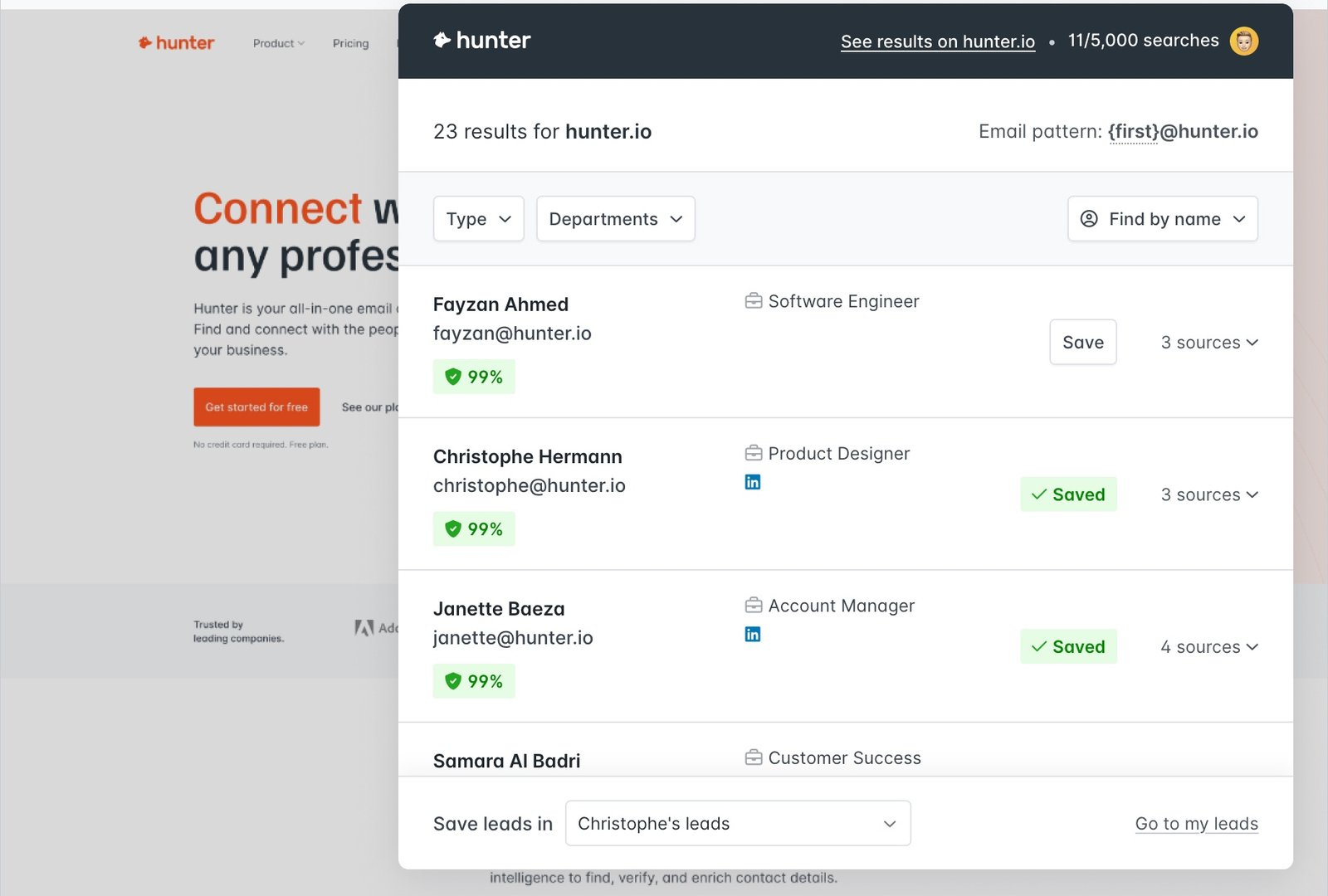
Hunter does not try to be a CRM. It does not want to manage your sales pipeline. It does one thing, and it does it better than almost anyone else on the planet: It finds the exact email patterns for specific companies and verifies that the inbox exists.
You simply type a domain (e.g., `microsoft.com`) into the search bar, and Hunter crawls the entire indexed web to find publicly available emails, deducing the company's internal email structure (e.g., `first.last@company.com`).
4 Meet Contender B: Apollo.io
Apollo is a high-volume outbound behemoth. It holds a static, continuously updated database of over 275 million contacts.
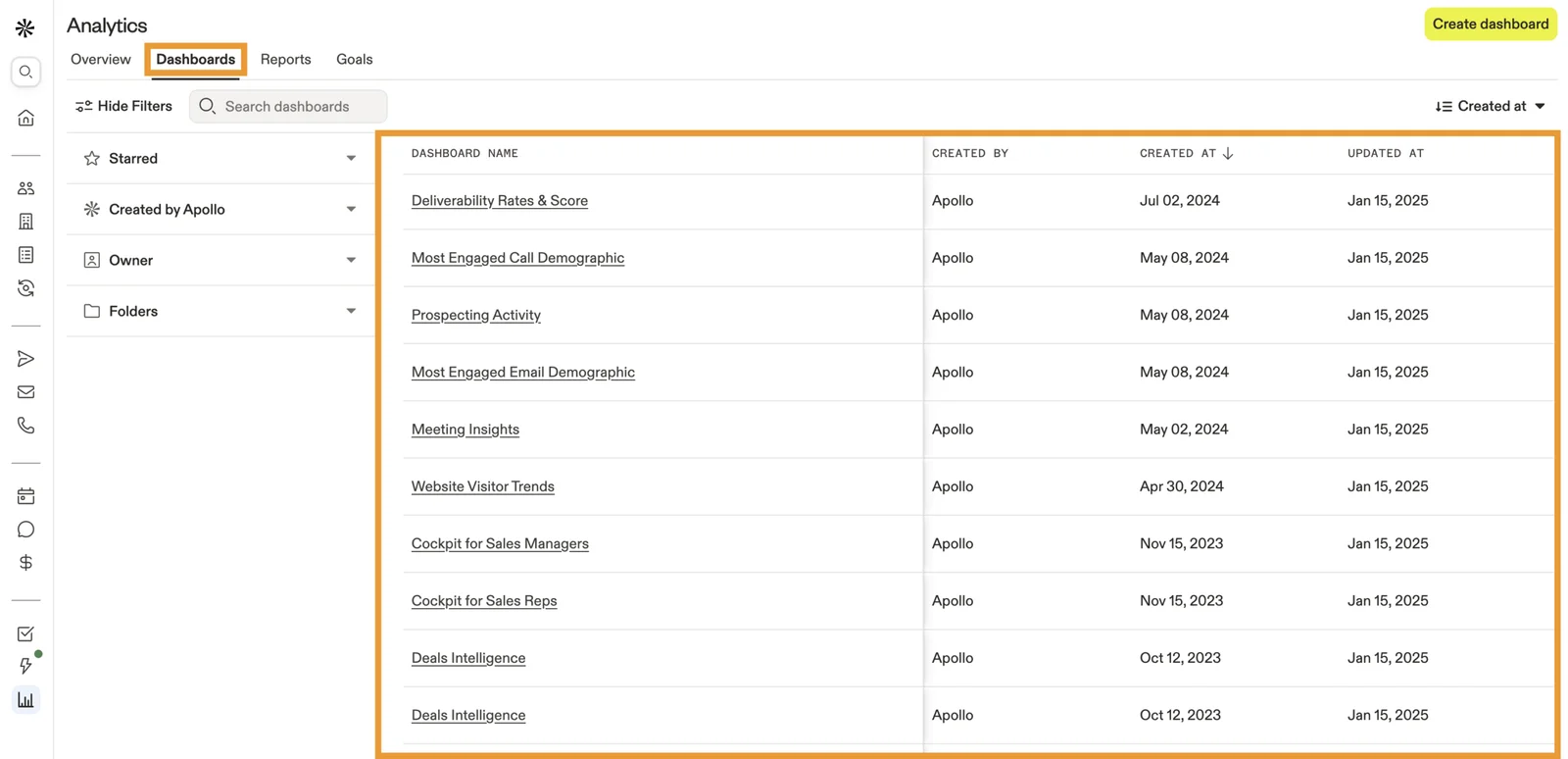
Instead of searching by domain, you log in and apply deep firmographic filters. You can ask Apollo to show you "Chief Marketing Officers at SaaS companies in Texas that recently raised a Series B." It instantly produces a list of thousands of leads. You can then highlight that list, click "Add to Sequence," and let Apollo's native email tool start dripping out cold pitches.
5 Round 1: Data Sourcing & Filters
Hunter requires you to know who you want to pitch. It lacks the deep database filters of a traditional data provider. If you want a list of 500 "HR Directors," Hunter cannot help you unless you already have a list of the 500 domains they work for.
Apollo dominates here. Its filtering capabilities are incredibly granular, allowing you to filter leads by technology stack (e.g., "Companies using Stripe"), recent funding events, headcount growth, and highly specific job titles.
Round 1 Winner: Apollo.io
For building massive lists from scratch, Apollo's database filters are unmatched.
6 Round 2: Data Accuracy & Verification
Database scale is a double-edged sword. Because Apollo holds 275 million contacts, data decays rapidly. A VP of Sales who changed jobs 3 months ago might still be listed at their old company in Apollo. If you blindly blast a massive Apollo list, you will experience hard bounces.
Hunter excels purely as a data hygiene tool. Its standalone Bulk Verifier pings mail servers in real-time. If Hunter says an email is valid, the bounce rate is practically non-existent.
Round 2 Winner: Hunter.io
Hunter's strict server-ping verification mathematically protects your domain reputation.
7 Round 3: Campaign Execution
Apollo is a true end-to-end platform. Once you filter your leads, you do not need to export a CSV. You can build multi-step email sequences, assign cold-calling tasks (and use the built-in VoIP dialer to make the calls), and connect with prospects on LinkedIn, all from one window.
Hunter offers a feature called "Campaigns," which allows for basic email sending and follow-ups. However, it is fundamentally a lightweight tool and lacks the aggressive multi-channel tracking and analytics required by a dedicated SDR team.
Round 3 Winner: Apollo.io
The native dialer and advanced sequence builder make Apollo the superior execution engine.
8 Round 4: Integrations & API
Hunter's API is legendary among developers. It is incredibly easy to pipe Hunter's real-time email verification directly into your own SaaS sign-up forms or custom CRM workflows to prevent users from registering with fake emails.
Apollo integrates deeply with Salesforce and HubSpot, allowing bi-directional syncing of lead statuses, phone calls logged, and emails opened, keeping your enterprise CRM perfectly updated.
9 Round 5: Ease of Use & UX
Apollo is a complex beast. The interface is dense, packed with hundreds of toggles, filters, and sequence analytics. Onboarding a new sales rep to use Apollo effectively takes a few days of structured training.
Hunter is frictionless. You paste a URL, and you get an email. The Chrome extension operates perfectly in the background, allowing you to scrape verified contact data from a company's website with a single click while browsing.
Round 5 Winner: Hunter.io
Zero learning curve. Pure, functional minimalism.
10 Performance Data: Processing Speed
When dealing with enterprise list building, processing time is billable time. Here is how they compare when tasked with taking raw data to actionable lists.
11 Advanced Strategy: The Waterfall Pipeline
The professional standard is a Waterfall Pipeline. You use Apollo to do the heavy lifting—filtering and exporting a raw list of 2,000 highly targeted prospects based on funding and tech-stack. Then, you take that CSV export and run it through Hunter’s Bulk Verifier. You aggressively delete all "Catch-all" and "Invalid" emails flagged by Hunter. This workflow gives you the massive scale of Apollo combined with the mathematical domain protection of Hunter.
12 Pricing Showdown
The cost structure dictates how you use them. Apollo charges per "Seat" for access to its CRM and sequencer, while Hunter charges purely for the volume of data you request and verify.
Hunter Starter
- 500 Searches/mo
- 1,000 Verifications/mo
- Domain Search Engine
- Chrome Extension
Apollo Basic
- Unlimited Email Credits
- Massive B2B Database
- Native Sequence Sender
- Basic CRM Integrations
13 Ideal Customer Profiles
- You should use Hunter if: You run targeted Account-Based Marketing (ABM) campaigns where you know exactly which 20 companies you want to land, and you just need the verified email of the CEO to send a manual pitch.
- You should use Apollo if: You have a team of 5 SDRs who need to make 50 cold calls and send 200 emails every single day to broad industry segments.
14 The Dealbreakers (What Users Hate)
- Apollo's Data Decay: Because the database is static and massive, people who change jobs are often not updated immediately. Expect a higher bounce rate if you don't use an external verifier.
- Hunter's Lack of Firmographics: If you don't know the exact domain name of the company you want to pitch, Hunter cannot help you generate a lead list.
15 The Missing Piece: Deliverability
16 Security & Compliance
Both platforms are strictly engineered for B2B environments. Hunter complies with GDPR by indexing only publicly available professional data. Apollo maintains strict SOC 2 Type II and GDPR compliance protocols, providing enterprise-grade security for teams integrating it with massive Salesforce instances.
17 The Pros & Cons Breakdown
- Flawless email verification protects sender reputation.
- Incredibly simple, minimalist UI with zero learning curve.
- Excellent API for developer integration.
- Cannot build massive lists by industry or job title alone.
- No built-in dialing software or deep sequence tracking.
- Massive 275M+ contact database for unlimited scale.
- Deep firmographic filters (funding, tech stack, intent).
- True all-in-one sequencer, dialer, and CRM.
- Data decays naturally; higher baseline bounce rate.
- Complex dashboard requires dedicated SDR training.
18 Frequently Asked Questions
1. Do I really need both tools?
While you can use either independently, top-tier agencies use Apollo to filter and generate massive lead lists, and then they pass those lists through Hunter’s bulk verifier to guarantee zero bounces and protect their sending domains.
2. Does Apollo verify emails automatically?
Apollo assigns confidence scores to emails, but because of the sheer scale of their database, it is not as strict or real-time as a dedicated verification tool like Hunter. You will still experience some bounces if you do not verify externally.
3. How exactly does Hunter find its emails?
Hunter indexes the public web. It scans millions of websites, PDFs, and public documents to find where email addresses have been publicly posted, allowing it to mathematically deduce a company's exact email format (e.g., first.last@company.com).
4. Does either tool integrate with Salesforce or HubSpot?
Yes. Both Apollo and Hunter feature native integrations with major CRMs like Salesforce, HubSpot, and Pipedrive, allowing you to push leads directly into your sales pipeline without messy CSV exports.
5. Can I use Apollo just for sending cold emails?
You can, but if you already have a verified list and just want to send cold emails, dedicated sequencers like Lemlist or Instantly offer better deliverability tools (like automated domain warmup) than Apollo's native sender.
6. Can Hunter find personal @gmail.com emails?
No. Hunter strictly indexes professional, domain-based emails (e.g., @company.com) to remain compliant with data privacy laws. It does not search for or verify free webmail addresses like Yahoo or Gmail.
7. Which one is better for LinkedIn prospecting?
Apollo's Chrome extension is highly optimized for LinkedIn, allowing you to instantly push LinkedIn profiles into an active email sequence and reveal phone numbers natively from your browser while scraping.
8. Do they offer free plans to test?
Yes, both tools offer robust free tiers. Hunter provides a set number of free domain searches and verifications per month, while Apollo offers free access to its database with limited export credits so you can evaluate the data quality before buying.
19 Final Verdict: Which Should You Choose?
Choosing between these two platforms comes down to the operational maturity of your sales team. This is not a true "either/or" comparison; they serve completely different operational stages of the outbound funnel.
If you are building a volume-heavy outbound engine from scratch and need to source thousands of leads by industry and job title, Apollo.io is the undisputed champion. It is an incredible, all-in-one growth platform.
However, if you are running highly targeted, surgical outreach campaigns—or if you need an absolute guarantee that your emails will not bounce and destroy your domain reputation—Hunter.io is the superior verification tool. For serious outbound operations, use Apollo for the data, and Hunter for the verification.